
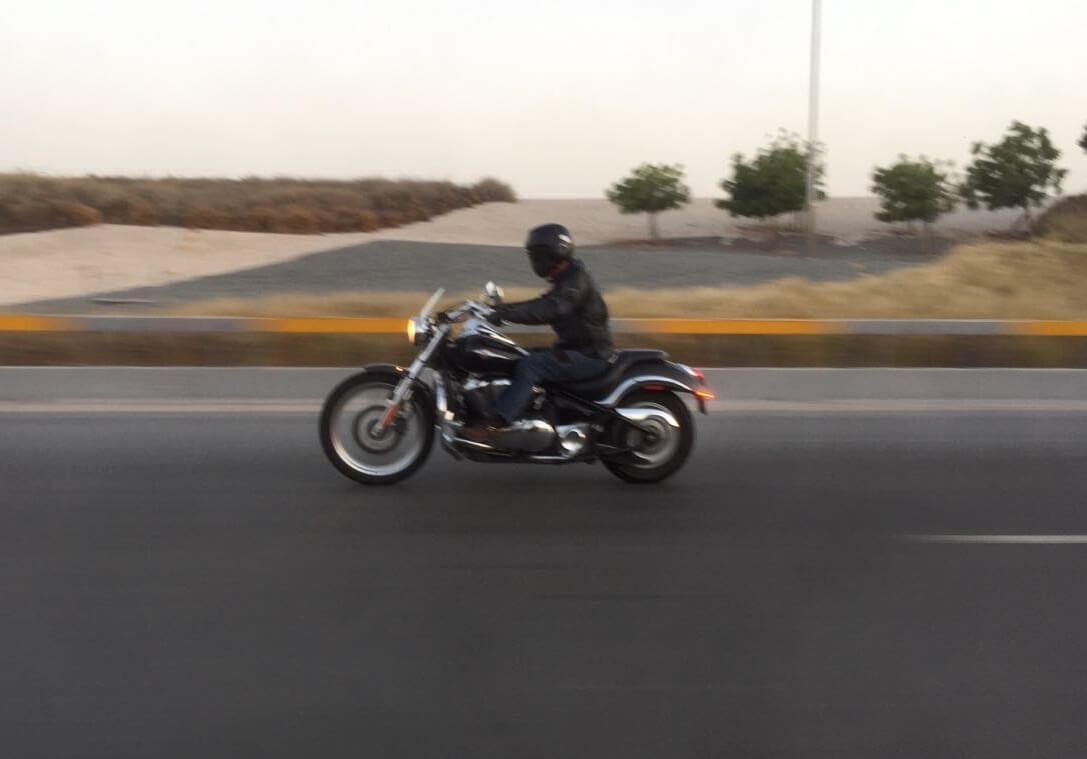
It’s a debate that echoes from sun-drenched bike nights to the anonymous forums of the internet: American iron versus Japanese precision. For decades, riders have sworn allegiance to either Harley-Davidson and Indian or to the metric might of Honda, Kawasaki, or Suzuki. The conversation often grinds down into tired stereotypes; reliability, cost, and a vague “cool factor.” But the truth, as it often does, lies buried deeper. Forget the clichés. We’re cutting through the noise with an analysis grounded in both the garage, with real rider stories, and the engineering bay, using hard technical data. Here are four surprising truths that will change how you think about this iconic rivalry.
The Financial Equation Is a Loop, Not a Straight Line
The most common assumption is that Japanese cruisers are the undisputed value champions. A prospective buyer on Reddit, for example, noted the stark difference between a 2013 Switchback listed for $13,000 and a 2008 Vulcan 1500 available for just $4,000 to $6,000. On paper, the choice for a budget-conscious rider seems obvious.
However, the financial story has a counter-intuitive twist: resale value. While American cruisers command a higher initial price, a technical breakdown of the market reveals they generally retain their value far more effectively. The lower entry price of a Japanese cruiser is often directly offset by a lower selling price when it’s time to upgrade. This creates a financial “loop” where the long-term cost of ownership is far more complex than the initial sticker shock suggests. As one rider succinctly put it:
“Only downside for harley is the buying price. But downside for a jap is the selling price.”
But the financial calculation is only part of the ownership story. For many, the decision isn’t made on a spreadsheet, but in the soul, where brand means more than just a badge.
You’re Buying Into a Culture, Not Just a Machine
The decision between an American and a Japanese cruiser goes well beyond performance metrics. Choosing an American cruiser, particularly a Harley-Davidson, is often about joining a community and embracing a specific legacy. This isn’t just marketing fluff; it’s a tangible part of the package. A technical analysis identifies “Iconic Design and Heritage” as a core strength of American brands, but what does that mean?
It means buying into an experience powered by torque-heavy V-twin engines, whose deep rumble from the exhaust is the unmistakable soundtrack of that heritage. That sound, that feel, is the visceral pull that creates such a powerful sense of identity. It’s a social decision as much as a mechanical one, a reality underscored by one rider who observed that some in the Harley community “look down on anything that isn’t a Harley.” It’s an investment in an identity, as another owner insightfully noted:
“You get a Harley to basically be in the harley club (I dont mean that as a shot) and to be a part of the american harley history.”
And that sense of identity often extends to making the machine uniquely your own, which is where another common assumption begins to fall apart.
The Customization Gap Is Wider Than You Think
For many riders, a cruiser isn’t a finished product; it’s a canvas for self-expression. While nearly any motorcycle can be customized, the sheer ease and breadth of available options represent a massive difference between the two categories. A technical breakdown reveals that “extensive” aftermarket support is a hallmark of American cruisers, while Japanese models often have “limitations in personalization.”
As one rider’s firsthand experience illustrates, this technical reality has very practical consequences. The owner, posting under the handle tekonus on Reddit, described his frustration with a previous Honda, where he had a choice of only two windshields and a single option for a rider backrest. He contrasts this sharply with his Harley Street Glide, for which he could choose from “dozens of different windshields, seats, exhaust, etc.” For a rider who wants to build a machine that is a true reflection of themselves, the vast aftermarket support for American brands is a critical, and often overlooked, advantage.
But personalization is pointless if the bike doesn’t feel right on the road, bringing us to one of the most persistent myths in the cruiser world: handling.
“Better Handling” Is a Myth, It Depends on the Road
A common stereotype suggests Japanese cruisers, with their reputation for “precision engineering” and “lightweight construction,” are universally more nimble than their heavier American counterparts. Technical analysis supports this to a degree, noting they often slice through traffic with an agility well-suited for “urban commuting and winding roads.” American cruisers, with their signature “weight and size,” are often typecast as masters of “long-distance cruising” on straight roads only.
But a rider’s direct experience can tell a surprisingly different story. One user, after owning four Japanese bikes, was shocked when he rode his friend’s older, heavier Harley-Davidson Electra Glide. He found it “handled and rode 1000x better” than his Yamaha. This anecdote dismantles the stereotype, proving that clever engineering can overcome raw weight. Handling isn’t determined by a bike’s country of origin, but by its design intent. The best-handling bike is ultimately the one that feels best to the rider for their specific style of riding.
Conclusion
The choice between an American and a Japanese cruiser is deeply personal, a complex decision that forces a rider to confront their own priorities. It’s a series of trade-offs that go far beyond the common chatter about cost and reliability. The “better” bike is the one that aligns with what you value most—be it the long-term financial equation, the pull of a cultural community, the freedom of limitless creativity, or the pure, unadulterated feel of the ride itself.
So, the question isn’t which bike is objectively better, but which bike is a better reflection of the rider you want to be?