
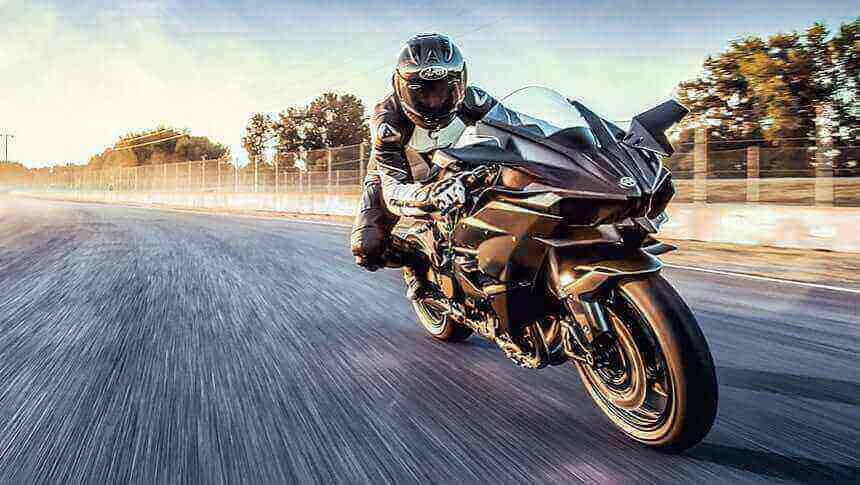
Few things demonstrate the extremes of motorcycle engineering better than top speed. From supercharged superbikes and turbine-powered machines to electric motorcycles, the fastest motorbikes in the world push power, aerodynamics and technology far beyond ordinary road bikes.
But comparing motorcycle top speeds needs some context.
Some figures are independently tested speeds. Others are manufacturer claims, electronically limited maximums or speeds reached with racing equipment. The Dodge Tomahawk is a concept vehicle, while the Kawasaki Ninja H2R is built for closed-course use rather than public roads.
With those differences clearly identified, here are 10 of the fastest and most famous high-speed motorcycles.
Fastest Motorbikes at a Glance
| Rank | Motorcycle | Top Speed | Important Note |
|---|---|---|---|
| 1 | Dodge Tomahawk | 300+ mph theoretical | Concept vehicle, not verified |
| 2 | Kawasaki Ninja H2R | 249 mph / 400 km/h | Track-only speed demonstration |
| 3 | MTT Y2K Turbine Superbike | 227 mph / 365 km/h | Manufacturer-recorded |
| 4 | Lightning LS-218 | 218 mph / 350 km/h | Land-speed gearing and fairings |
| 5 | Ducati Panigale V4 R | up to 205 mph / 331 km/h | Racing configuration |
| 6 | Suzuki Hayabusa | 194 mph / 312 km/h | Period-tested first generation |
| 7 | Aprilia RSV4 1100 Factory | 190+ mph / 305+ km/h | Manufacturer figure |
| 8 | BMW S 1000 RR | 188 mph / 303 km/h | Manufacturer specification |
| 9 | Yamaha YZF-R1 | 186 mph / 299 km/h | Electronically limited |
| 10 | Honda CBR1100XX Super Blackbird | 177 mph / 285 km/h | Period-tested 1999 model |
Top-speed testing conditions differ, so the figures above should not be treated as results from one standardized test.
1. Dodge Tomahawk: 300+ mph Theoretical
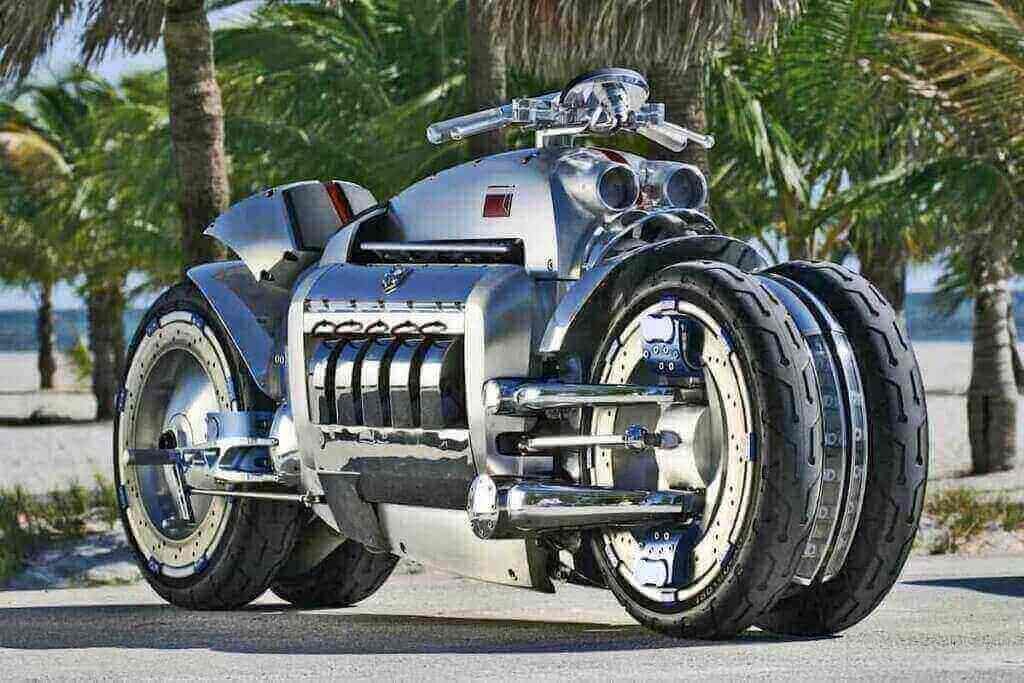
The Dodge Tomahawk remains one of the wildest machines ever associated with the motorcycle world.
Revealed in 2003, it combined an 8.3-liter Dodge Viper V10 engine with four closely spaced wheels and striking motorcycle-style bodywork. Dodge published extraordinary estimated performance figures, including a potential speed above 300 mph.
There is an important qualification: the Tomahawk never demonstrated anything close to that speed in an independently verified test.
It was a concept vehicle rather than a normal production motorcycle, and its four-wheel layout also makes comparison with conventional motorcycles difficult.
Top speed: 300+ mph theoretical
Engine: 8.3-liter V10
Status: Concept vehicle
Road legal: No conventional production homologation
The Tomahawk remains on this list because it has become inseparable from discussions about the fastest motorbikes ever conceived, but its quoted speed should be understood as theoretical rather than proven.
2. Kawasaki Ninja H2R: 249 mph
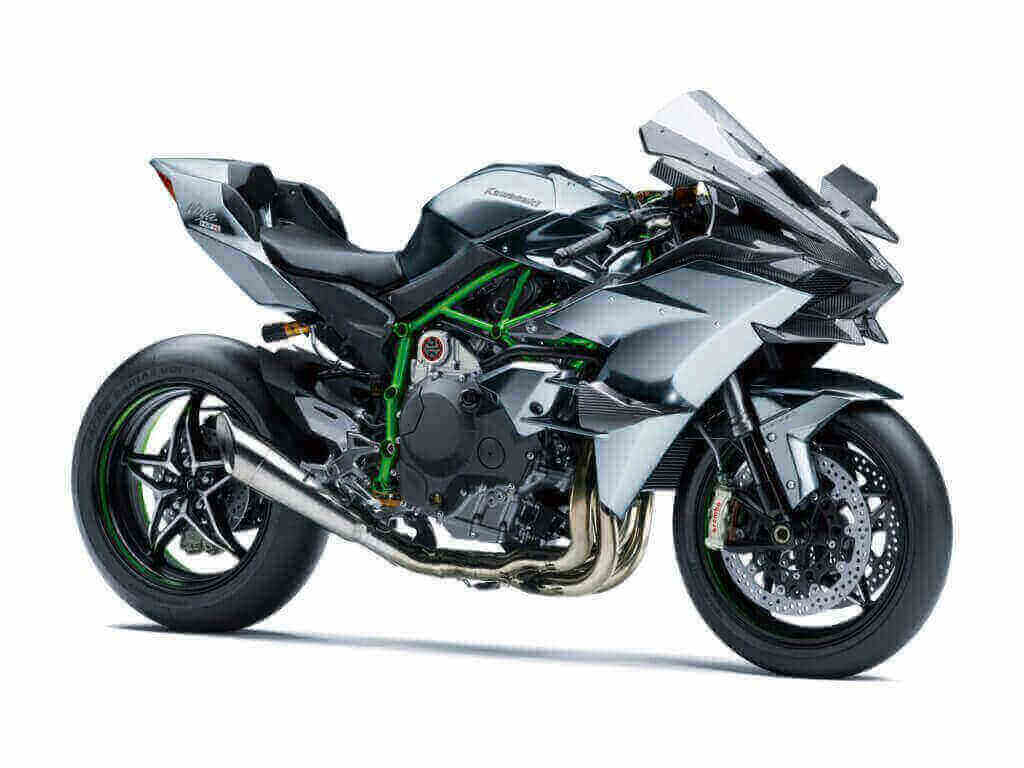
The Kawasaki Ninja H2R is much closer to what most riders imagine when they hear the words “world’s fastest motorcycle.”
Its 998 cc inline-four uses a Kawasaki-developed centrifugal supercharger and produces more than 300 horsepower. Unlike the road-going Ninja H2, the H2R is designed exclusively for closed-course use.
In 2016, five-time World Supersport champion Kenan Sofuoğlu reached an indicated 400 km/h, or approximately 249 mph, on an H2R during a run across Turkey’s Osman Gazi Bridge.
The run was not a conventional two-way homologated land-speed record, but it remains one of the most famous production-motorcycle speed demonstrations ever performed.
Top speed: 249 mph / 400 km/h
Engine: 998 cc supercharged inline-four
Status: Production track motorcycle
Road legal: No
Owners of the road-going version can also find Kawasaki Ninja H2 service manuals in our motorcycle manual catalog.
3. MTT Y2K Turbine Superbike: 227 mph
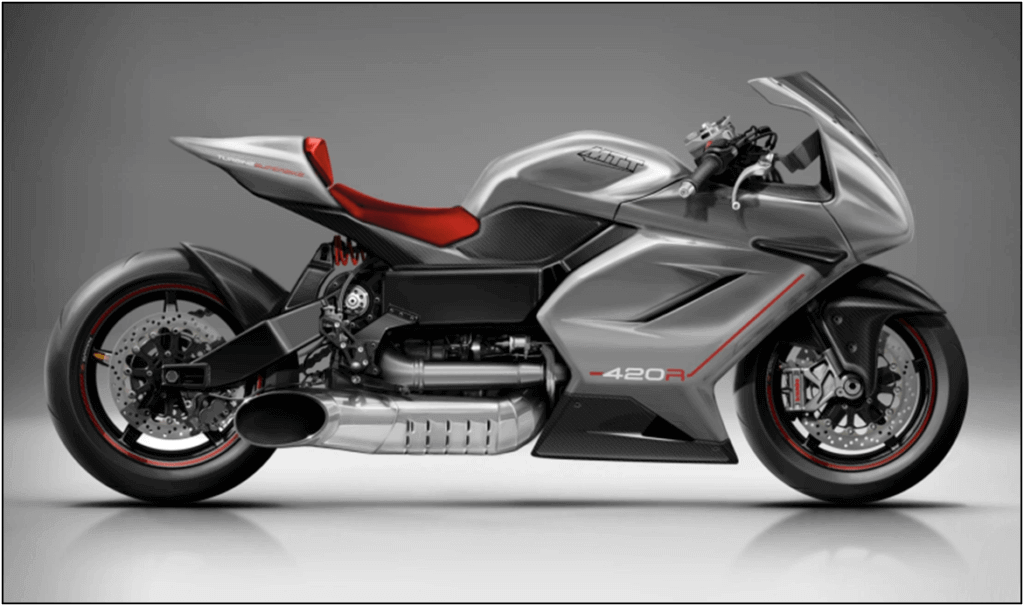
The MTT Y2K Turbine Superbike takes a completely different approach to motorcycle performance.
Instead of a piston engine, the Y2K uses a Rolls-Royce-Allison gas turbine. Marine Turbine Technologies states that the first-generation Y2K produced more than 320 horsepower and 425 lb-ft of torque.
MTT also states that the Y2K was clocked at 227 mph.
That corrects an important error in the previous version of this article: the Y2K should not be listed as producing 420 horsepower. The 420 hp figure belongs to MTT’s later 420RR.
Top speed: 227 mph / 365 km/h
Power: 320+ hp
Engine: Rolls-Royce-Allison gas turbine
Status: Limited-production motorcycle
The combination of turbine power, extreme performance and road-going design makes the Y2K one of the most unusual motorcycles ever produced.
4. Lightning LS-218: 218 mph
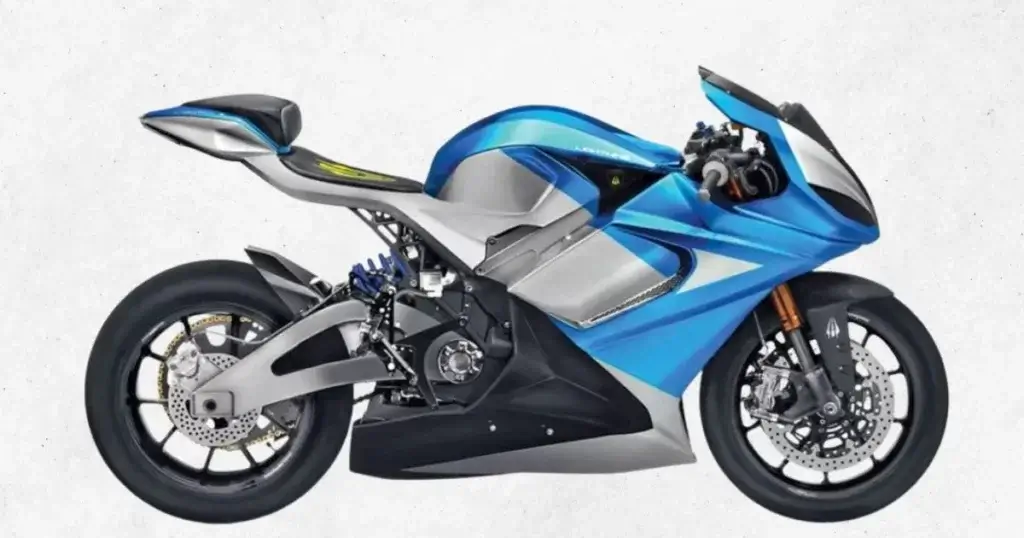
The Lightning LS-218 demonstrates how serious electric motorcycle performance has become.
Its name comes directly from its extraordinary speed capability. Lightning specifies a maximum of 218 mph, although the company notes that this figure uses land-speed-record gearing and fairings.
Current specifications quote 263 horsepower at the motor shaft and 244 horsepower at the rear wheel.
Top speed: 218 mph / 350 km/h
Motor: Liquid-cooled electric motor
Power: Up to 263 hp at the motor shaft
Status: Production electric motorcycle
The LS-218 remains one of the most significant high-performance electric motorcycles because its performance is competitive with some of the fastest combustion-engined superbikes.
5. Ducati Panigale V4 R: Up to 205 mph
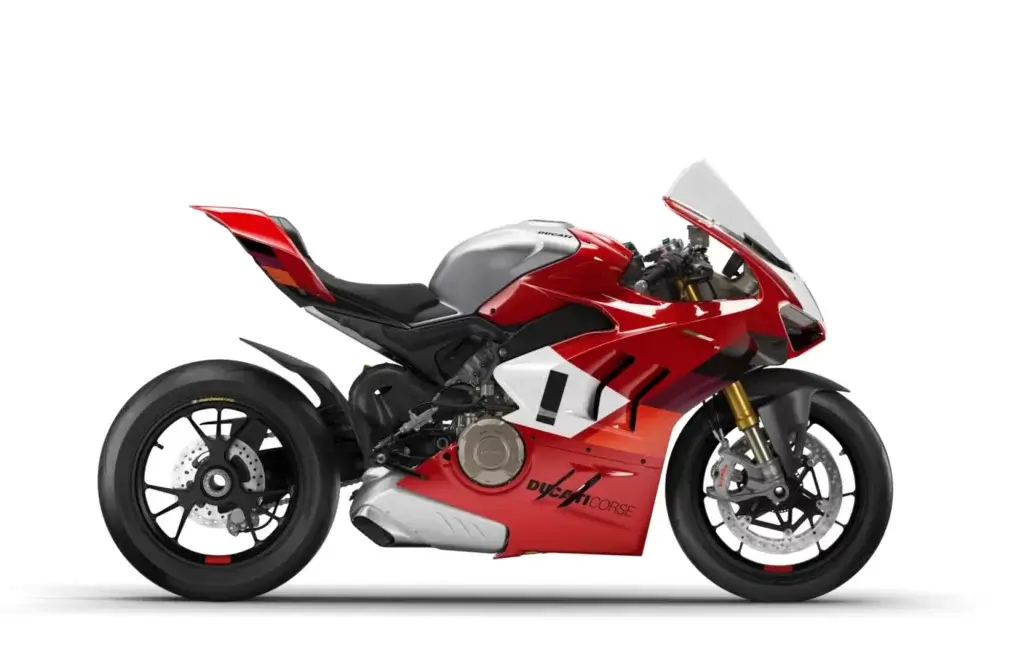
The Ducati Panigale V4 R brings World Superbike technology remarkably close to a production motorcycle.
The current model uses a 998 cc Desmosedici Stradale R V4, correcting the 1,199 cc specification previously shown on this page.
Ducati states that the Panigale V4 R can reach 318.4 km/h, approximately 198 mph, in standard configuration. With the non-homologated racing exhaust fitted, maximum speed rises to 330.6 km/h, approximately 205 mph.
Top speed: 198 mph standard / 205 mph racing configuration
Engine: 998 cc V4
Power: 218 hp in homologated specification
Status: Road-homologated motorcycle with optional racing equipment
The distinction matters. The headline 205 mph figure is not the standard road configuration.
6. Suzuki Hayabusa: 194 mph
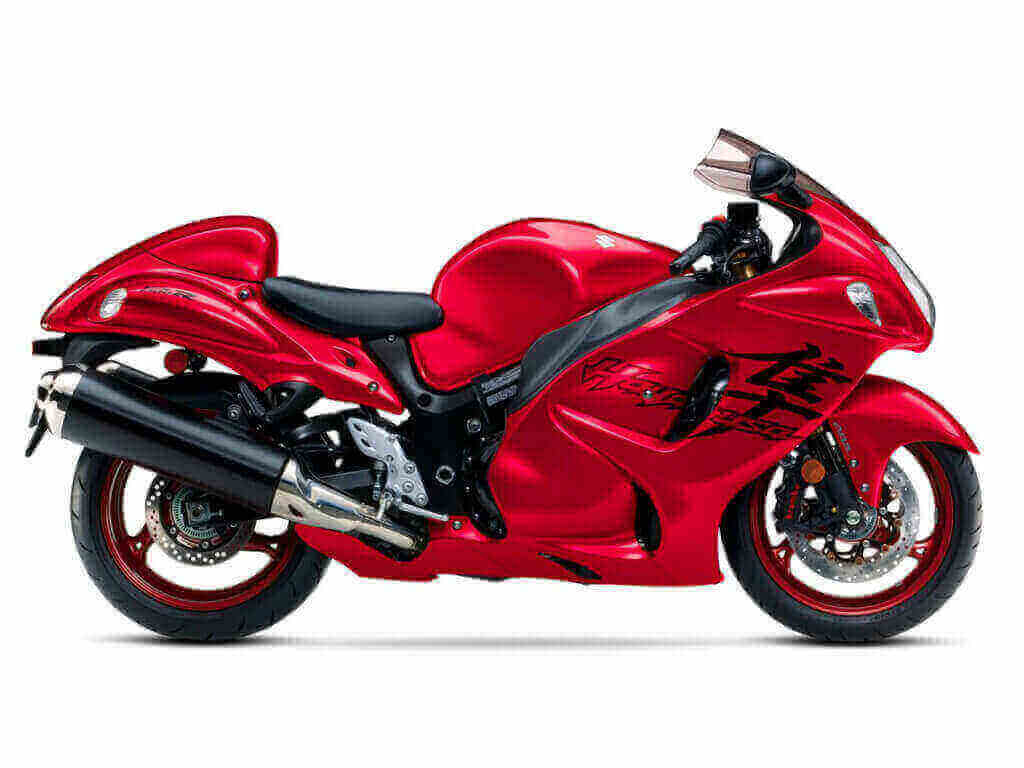
Few motorcycles are as closely associated with top speed as the Suzuki Hayabusa.
When the original GSX1300R appeared in 1999, it transformed the hyperbike category. Period testing by Cycle World recorded 194 mph, making the Hayabusa the new benchmark for production motorcycle speed.
Later motorcycles became associated with the voluntary industry limit of approximately 300 km/h, or 186 mph.
The current Hayabusa uses a 1,340 cc inline-four, but the famous 194 mph figure belongs to the original generation rather than today’s electronically controlled model.
Top speed: 194 mph / 312 km/h for the original Hayabusa in period testing
Engine: Inline-four
Status: Production road motorcycle
Introduced: 1999
If you own one, browse our Suzuki Hayabusa GSX1300R service manuals, covering multiple generations of the bike.
7. Aprilia RSV4 1100 Factory: 190+ mph
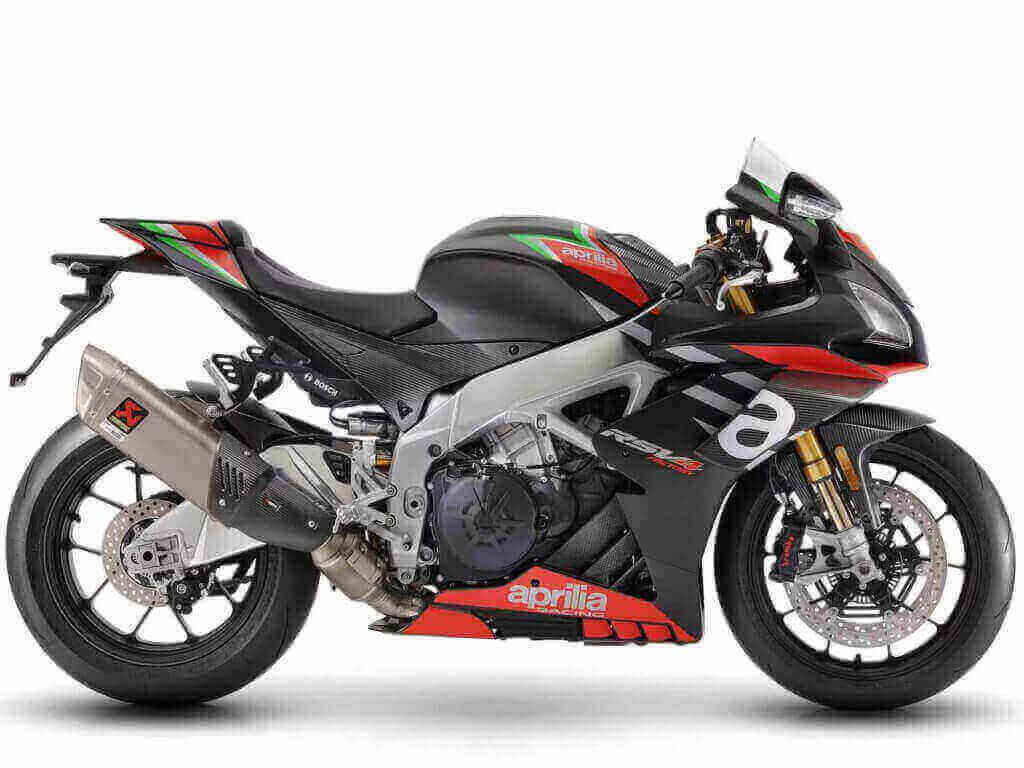
The Aprilia RSV4 has long been one of the most serious V4 superbikes available for road use.
Aprilia has stated that its 1,099 cc RSV4 platform exceeds 305 km/h actual top speed, putting it above approximately 190 mph.
The latest RSV4 Factory develops 220 horsepower from its compact 65-degree V4 engine and combines that performance with advanced aerodynamics and sophisticated electronic rider controls.
Top speed: More than 190 mph / 305 km/h
Engine: 1,099 cc V4
Power: 220 hp on the current model
Status: Road-legal production superbike
The RSV4’s appeal is not simply straight-line speed. Its V4 engine, chassis and racing-derived electronics were developed around high-performance circuit riding.
8. BMW S 1000 RR: 188 mph
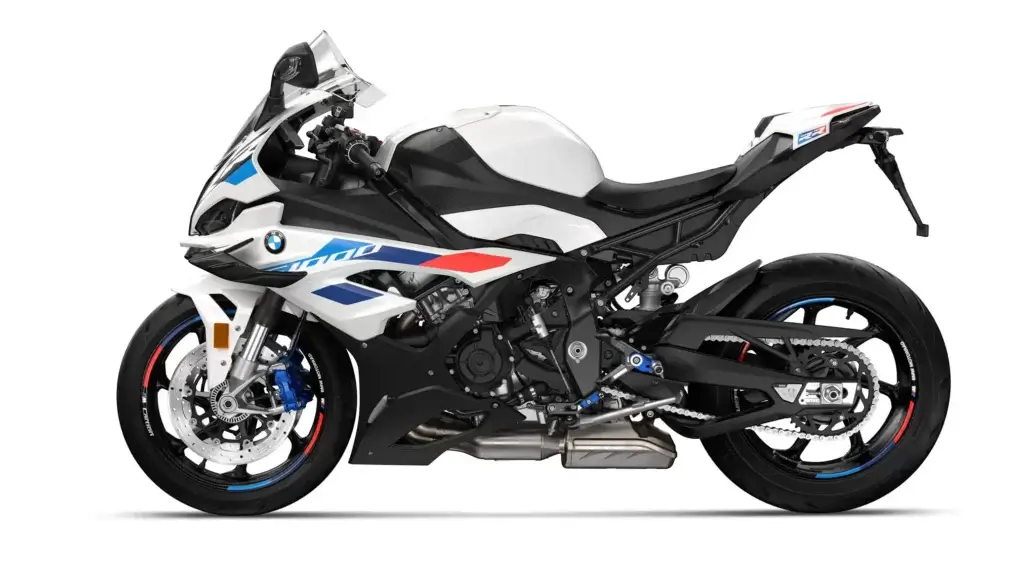
BMW changed perceptions of the liter-class superbike when it introduced the S 1000 RR.
The current motorcycle uses a 999 cc inline-four with BMW ShiftCam variable valve timing and produces 205 horsepower.
BMW officially lists the S 1000 RR’s maximum speed as 188 mph.
Top speed: 188 mph / 303 km/h
Engine: 999 cc inline-four
Power: 205 hp
Status: Road-legal production superbike
That makes the 188 mph figure more useful than the conflicting 186 mph number previously shown on this page.
9. Yamaha YZF-R1: 186 mph
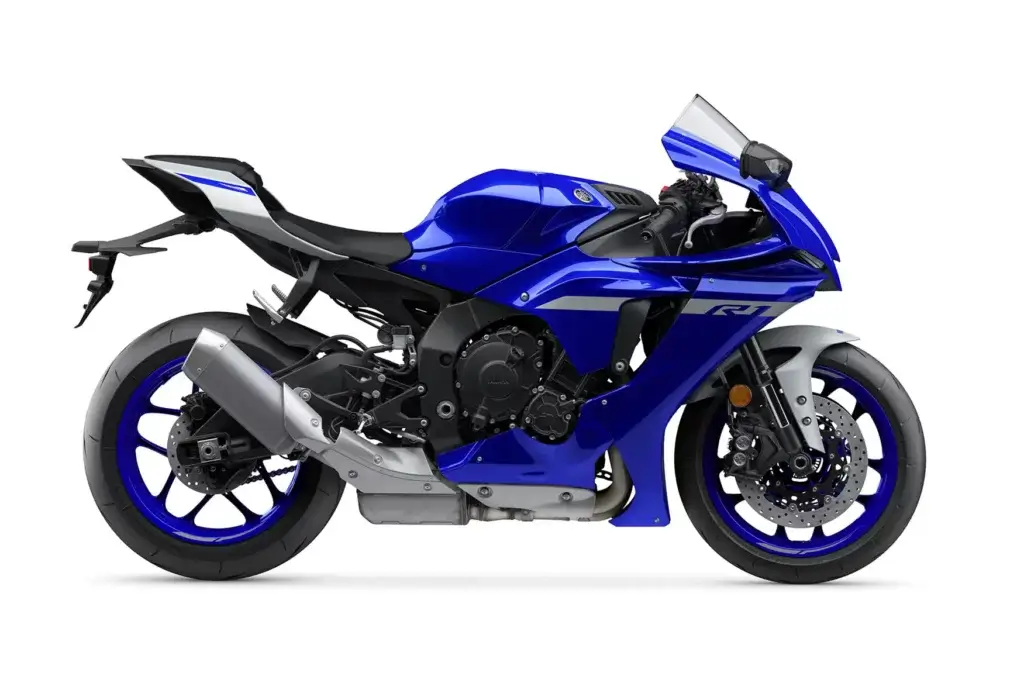
Since its introduction in 1998, the Yamaha YZF-R1 has been one of the defining Japanese superbikes.
The major 2015 redesign introduced a 998 cc crossplane-crank inline-four producing approximately 200 horsepower together with sophisticated electronics influenced by Yamaha’s MotoGP program.
The road-going 2015 generation was electronically limited to approximately 300 km/h, or 186 mph. Yamaha’s optional Circuit ECU could remove the top-speed restriction for track use.
Top speed: 186 mph / 299 km/h in restricted road configuration
Engine: 998 cc crossplane inline-four
Power: Approximately 200 hp
Status: Production superbike
Our catalog includes Yamaha YZF-R1 service manuals covering multiple generations of the R1.
10. Honda CBR1100XX Super Blackbird: 177 mph

The Honda CBR1100XX Super Blackbird deserves a place here because of its importance in the motorcycle top-speed wars of the 1990s.
Honda designed the CBR1100XX to challenge Kawasaki’s ZX-11. The early Blackbird was tested at around 174 mph, while the revised fuel-injected 1999 motorcycle reached 177 mph in Cycle World testing.
That makes the previous 194 mph figure on this page incorrect. The 194 mph figure belongs to the 1999 Suzuki Hayabusa, which subsequently took the speed crown.
Top speed: 177 mph / 285 km/h in period testing
Engine: 1,137 cc inline-four
Status: Production road motorcycle
Production: 1996-2007
The Super Blackbird may no longer sit at the top of the speed charts, but historically it is one of the machines that drove the late-1990s battle to build the world’s fastest production motorcycle.
We also have Honda CBR1100XX Super Blackbird service manuals covering the model’s production years.
Why Do So Many Motorcycles Top Out Around 186 mph?
The repeated 186 mph figure is not a coincidence.
Around the beginning of the 2000s, major motorcycle manufacturers adopted a voluntary top-speed ceiling of approximately 300 km/h, or 186 mph, following increasingly intense competition to produce the world’s fastest road motorcycle.
That is why machines with very different engines and power outputs can still have similar electronically limited maximum speeds.
Track motorcycles, racing configurations and specially prepared machines are not necessarily subject to the same restrictions.
What Is the Fastest Street-Legal Motorcycle?
There is no perfectly simple answer because the definition depends on whether manufacturer claims, independently tested speeds, limited-production machines and modified racing configurations are included.
The Dodge Tomahawk cannot reasonably claim the title because its extraordinary speed was theoretical and it was a concept vehicle.
The Kawasaki Ninja H2R is a production motorcycle, but it is not road legal.
The MTT Y2K is particularly notable because MTT describes it as the first turbine-powered street-legal motorcycle and states that it was clocked at 227 mph.
Among conventional piston-engined road superbikes, bikes such as the Ducati Panigale V4 R, Aprilia RSV4 Factory, BMW S 1000 RR and Yamaha YZF-R1 demonstrate how far road-going motorcycle performance has progressed.
Fastest Motorbike FAQ
Is the Dodge Tomahawk really capable of 350 mph?
There is no verified 350 mph run. Dodge published estimates above 300 mph, but the Tomahawk was a concept vehicle and its extraordinary theoretical maximum was never established through a conventional top-speed test.
Has a Kawasaki Ninja H2R really reached 400 km/h?
Kenan Sofuoğlu reached an indicated 400 km/h on a Ninja H2R during a specially prepared bridge run in Turkey in 2016. It was a one-direction speed demonstration rather than a conventional independently homologated land-speed record.
What was the fastest production motorcycle of the 1990s?
The title changed several times. Kawasaki’s ZX-11 dominated the early part of the decade, the Honda CBR1100XX Super Blackbird followed, and in 1999 the Suzuki Hayabusa dramatically raised the benchmark with a period-tested speed of 194 mph.
Why is the Hayabusa famous for speed?
The original Hayabusa arrived during an intense competition among manufacturers to build the world’s fastest production road motorcycle. Its combination of engine power and aerodynamic bodywork helped it reach 194 mph in period testing, making the Hayabusa synonymous with extreme motorcycle performance.
The Pursuit of Motorcycle Speed
These ten machines represent very different approaches to going extremely fast.
The Dodge Tomahawk used a V10 and four wheels. MTT installed an aircraft-derived turbine. Lightning turned to electric power. Kawasaki developed its own supercharger, while Ducati, Aprilia, BMW, Yamaha, Suzuki and Honda refined the conventional superbike and hyperbike formula.
They cannot all be compared under identical conditions, but each has played a role in pushing motorcycle performance forward.
And for bikes such as the Kawasaki Ninja H2, Suzuki Hayabusa, Yamaha YZF-R1 and Honda CBR1100XX, the engineering behind that performance also makes having the correct factory service manual particularly valuable when maintenance or repair work is required.